Cart
0
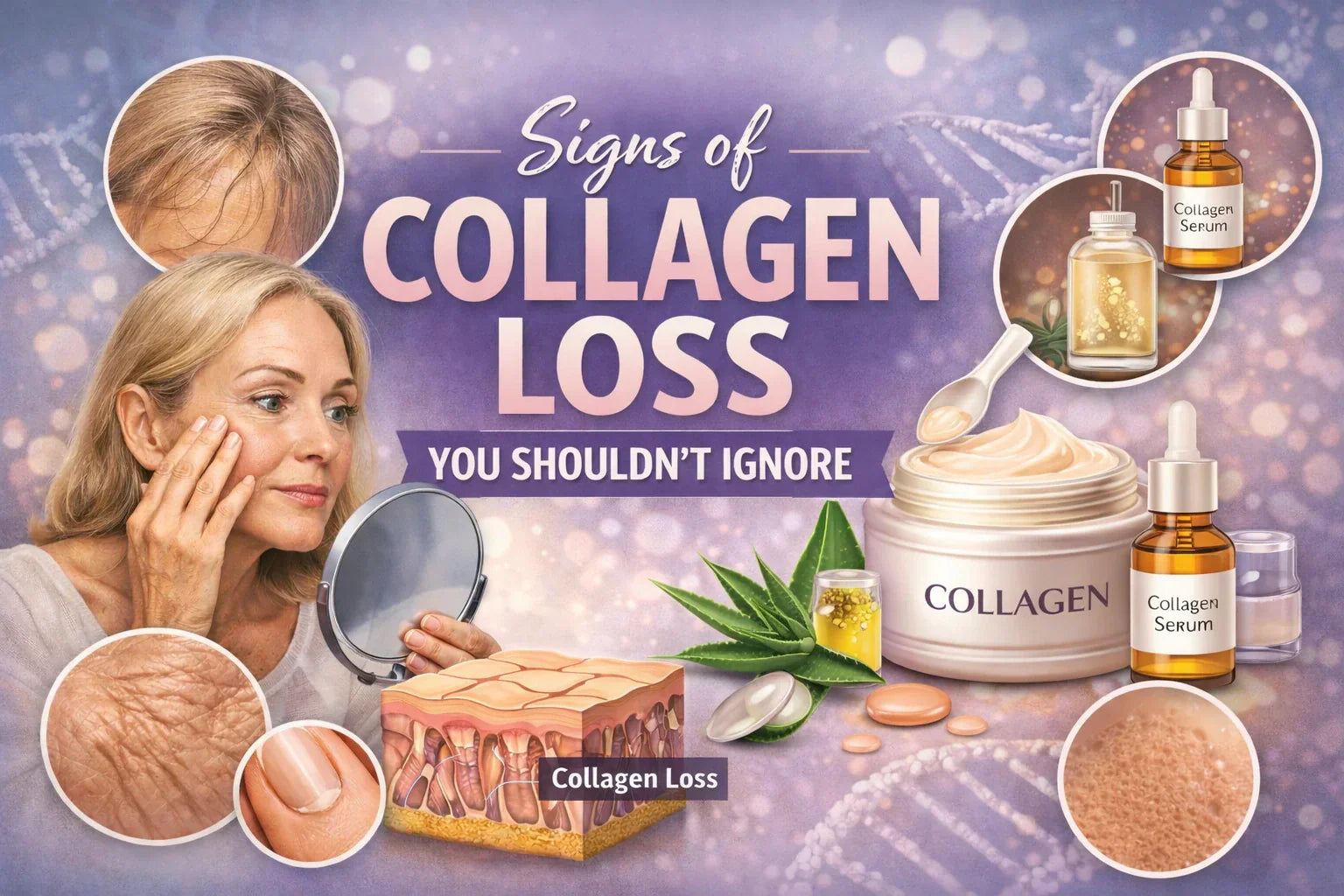
Collagen is one of the most important building blocks of healthy, youthful skin. It is a natural protein found in the skin that provides structure, firmness, and elasticity. In fact, collagen makes up nearly 70–80% of our skin’s dry weight. However, as we age, our body’s ability to produce collagen gradually decreases. Starting as early as our mid-20s, collagen production declines by about 1% each year, leading to visible and sometimes unnoticed changes in the skin.
Understanding the signs of collagen loss early can help you take preventive steps, adopt the right skincare routine, and slow down premature aging. Let’s explore the most common signs of collagen loss you shouldn’t ignore.
1. Loss of Skin Firmness and Elasticity
One of the earliest and most noticeable signs of collagen loss is reduced skin firmness. Healthy collagen keeps the skin tight and elastic, allowing it to bounce back when stretched. As collagen levels drop, the skin begins to lose its ability to hold its shape.
You may notice sagging around the jawline, cheeks, neck, and under-eye area. The skin may feel looser and less toned, giving the face a tired or aged appearance. This loss of elasticity is often subtle at first but becomes more prominent over time if left unaddressed.
2. Fine Lines and Wrinkles
Fine lines and wrinkles are classic indicators of collagen breakdown. Collagen acts as a support system beneath the skin’s surface, keeping it smooth and plump. When this support weakens, the skin starts to crease and fold more easily.
Early wrinkles usually appear around expressive areas such as the eyes (crow’s feet), forehead, and mouth. Over time, these fine lines deepen into permanent wrinkles. While aging is natural, premature collagen loss due to sun exposure, pollution, stress, and poor skincare habits can accelerate this process.
3. Dryness and Dehydrated Skin
Collagen plays an important role in maintaining skin hydration by supporting the skin’s moisture-retention ability. When collagen levels decrease, the skin struggles to hold onto moisture, leading to dryness and dehydration.
You may experience:
-
Flaky or rough skin texture
-
Tightness after washing your face
-
Dull, lifeless appearance
Dry skin caused by collagen loss often feels different from seasonal dryness—it persists even when using regular moisturizers unless deeper hydration and collagen-supporting products are introduced.
4. Dullness and Uneven Skin Texture
A healthy collagen structure promotes smooth, even-textured skin. As collagen diminishes, the skin’s renewal process slows down, causing dead skin cells to accumulate on the surface.
This results in:
-
Rough or uneven texture
-
Lack of natural glow
-
Patchy or tired-looking skin
Without proper collagen support, the skin loses its smoothness and radiance, making makeup settle into fine lines and pores more easily.
5. Enlarged Pores
Another lesser-known sign of collagen loss is the appearance of enlarged pores. Collagen helps keep pores tight by maintaining the skin’s firmness. When collagen weakens, the surrounding skin loses its ability to support pore structure.
This can cause pores—especially around the nose, cheeks, and T-zone—to appear larger and more visible. Enlarged pores are often mistaken for oiliness, but weakened collagen is a major contributing factor.
6. Thinning Skin
As collagen levels decrease, the skin gradually becomes thinner and more fragile. Thinning skin may appear more translucent, making veins and capillaries more noticeable, especially around the eyes and hands.
You may also notice:
-
Skin bruises more easily
-
Increased sensitivity
-
Reduced resilience against environmental damage
Thinning skin is a clear sign that the skin’s internal support structure is weakening due to collagen loss.
7. Slower Skin Healing and Repair
Collagen is essential for skin regeneration and repair. When collagen production slows, the skin takes longer to heal from acne, pigmentation, minor cuts, or irritation.
You may observe:
-
Acne marks lasting longer than usual
-
Slow fading of dark spots
-
Prolonged redness or sensitivity
This delayed healing process is a strong indicator that your skin needs collagen support and barrier-strengthening care.
8. Increased Appearance of Fine Creases After Sleep
If you notice sleep lines or facial creases that take longer to disappear after waking up, it may be due to reduced collagen and elasticity. Well-supported skin bounces back quickly, while collagen-depleted skin tends to hold onto creases longer.
What Causes Collagen Loss?
Several factors contribute to collagen breakdown, including:
-
Natural aging
-
Excessive sun exposure (UV damage)
-
Pollution and free radicals
-
Smoking and alcohol consumption
-
Poor diet lacking protein and antioxidants
-
Stress and lack of sleep
Understanding these triggers helps in making lifestyle and skincare changes to protect existing collagen.
How to Support and Boost Collagen Levels
While collagen loss is inevitable, it can be slowed down with the right approach:
-
Use collagen-boosting skincare products such as masks, serums, and creams
-
Maintain proper hydration
-
Protect your skin with daily sunscreen
-
Follow a consistent skincare routine
-
Include antioxidant-rich foods and adequate protein in your diet
Korean skincare routines, especially collagen-infused face masks, are popular for delivering intense hydration and visible plumping benefits, helping skin appear firmer and more youthful.